Very Low Energy Density Food Examples
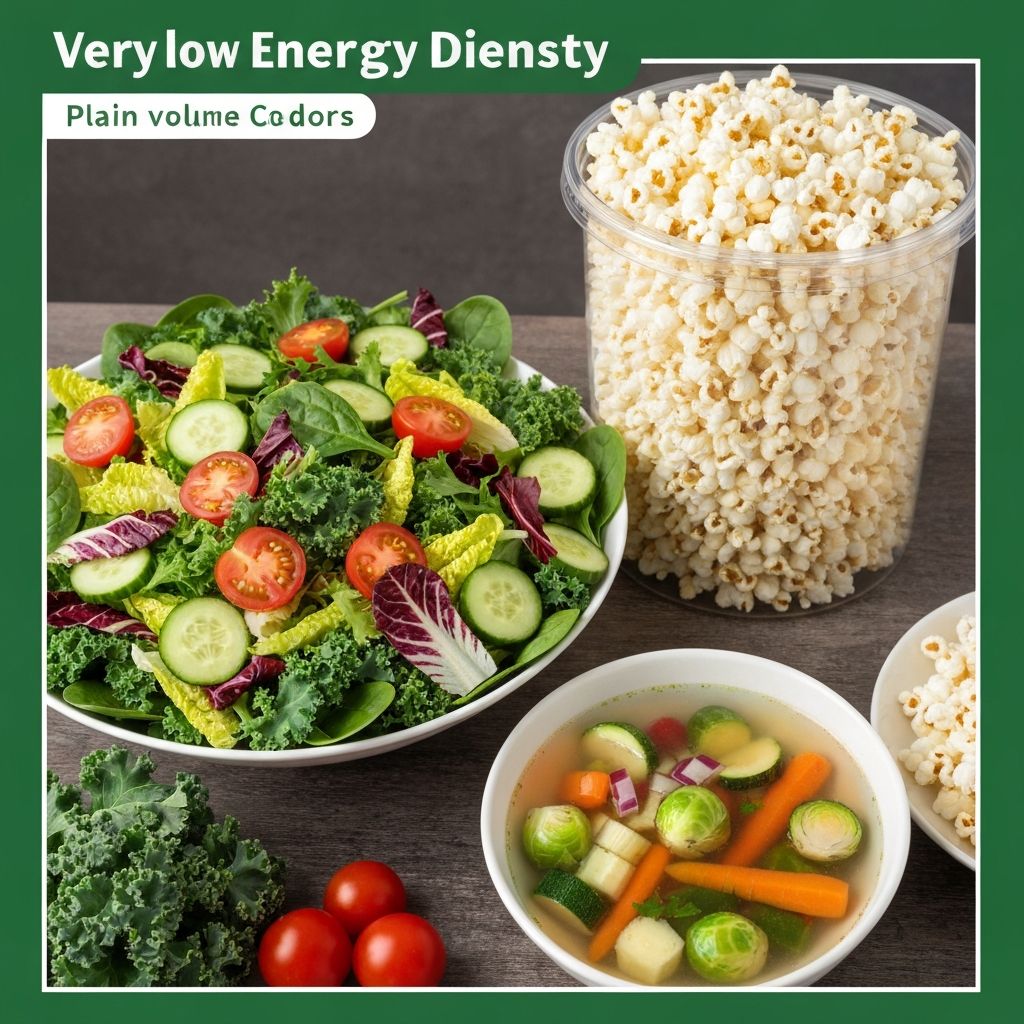
What Constitutes Very Low Density?
Very low energy-density foods contain approximately 0.1–0.5 kcal/g. These foods are primarily water and fibre with minimal fat content. They provide substantial volume and weight relative to their caloric contribution.
Leafy Greens
Energy density: approximately 0.15–0.25 kcal/g
Examples: Lettuce, spinach, arugula, kale, chard, cabbage
Composition: 90–95% water, 1–3% fibre, minimal fat, minimal protein
Characteristics: Extremely high volume relative to calories. A large mixed-greens salad (250 g) contains approximately 40–60 kcal. High water and fibre content, particularly in leafy varieties, results in minimal energy density.
Cruciferous Vegetables
Energy density: approximately 0.25–0.35 kcal/g
Examples: Broccoli, cauliflower, Brussels sprouts, cabbage
Composition: 88–92% water, 2–4% fibre, minimal fat, 2–4% protein
Characteristics: High fibre content compared to leafy greens. A 150 g serving of broccoli contains approximately 50 kcal. Substantial volume despite modest caloric content.
Other Vegetables
Energy density: approximately 0.2–0.4 kcal/g
Examples: Cucumber, tomato, zucchini, bell peppers, carrots (raw), radishes, green beans
Composition: 85–96% water depending on variety, 1–3% fibre, minimal fat
Characteristics: Wide volume per calorie. A large cucumber (300 g) contains approximately 45 kcal. Raw preparation maintains water content; cooking may reduce volume but typically maintains low energy density.
Vegetable Broths and Soups
Energy density: approximately 0.1–0.3 kcal/g (clear broths approximately 0.1–0.15 kcal/g)
Examples: Clear vegetable broth, vegetable soup, miso soup (light), clear bone broth
Composition: 95–99% water, minimal fat, soluble and insoluble fibre from vegetables
Characteristics: Extremely high water content. A 300 mL serving of clear broth contains approximately 15–30 kcal. Rapid gastric emptying compared to solid foods.
Berries
Energy density: approximately 0.4–0.6 kcal/g
Examples: Strawberries, raspberries, blueberries, blackberries
Composition: 85–92% water, 4–8% carbohydrates, 1–4% fibre
Characteristics: Higher fibre-to-carbohydrate ratio compared to other fruits. A 150 g serving of strawberries contains approximately 50 kcal. Relatively low energy density despite carbohydrate content due to high water percentage.
Watery Fruits
Energy density: approximately 0.3–0.4 kcal/g
Examples: Watermelon, cantaloupe, oranges, grapefruits, apples, pears (raw)
Composition: 85–92% water, 7–15% carbohydrates, 1–3% fibre
Characteristics: High water content maintains low energy density despite moderate carbohydrate content. A large slice of watermelon (300 g) contains approximately 90 kcal. Whole fruits with skin and seeds provide more fibre than juice.
Mushrooms
Energy density: approximately 0.3 kcal/g
Examples: Button mushrooms, portobello, cremini, oyster, shiitake
Composition: 85–95% water, 1–3% fibre, <1% fat, 1–3% protein
Characteristics: Extremely low energy density. A 150 g serving contains approximately 45 kcal. Fibrous structure provides volume despite minimal caloric content.
Legumes (Cooked)
Energy density: approximately 0.4–0.7 kcal/g
Examples: Lentils (cooked), chickpeas (cooked), beans (cooked)
Composition: 60–70% water when cooked, 4–9% fibre, 7–12% protein, 1–2% fat
Characteristics: Moderate energy density compared to raw vegetables. A 150 g serving contains approximately 120–150 kcal. High fibre and protein content increases satiety relative to caloric content.
Popcorn (Plain, Air-Popped)
Energy density: approximately 1.0–1.2 kcal/g
Examples: Plain air-popped popcorn (no oil added)
Composition: Minimal water, high fibre from popcorn hull
Characteristics: Air incorporation reduces density despite carbohydrate base. A 30 g serving (approximately 3 cups popped) contains approximately 90–100 kcal. Much lower energy density than regular popcorn prepared with oil.
Summary Comparison
| Food Category | Energy Density (kcal/g) | Typical Portion |
|---|---|---|
| Leafy Greens | 0.15–0.25 | 250 g (40–60 kcal) |
| Cruciferous Vegetables | 0.25–0.35 | 150 g (40–50 kcal) |
| Other Vegetables | 0.2–0.4 | 200 g (40–80 kcal) |
| Clear Broths | 0.1–0.15 | 300 mL (30–45 kcal) |
| Berries | 0.4–0.6 | 150 g (60–90 kcal) |